

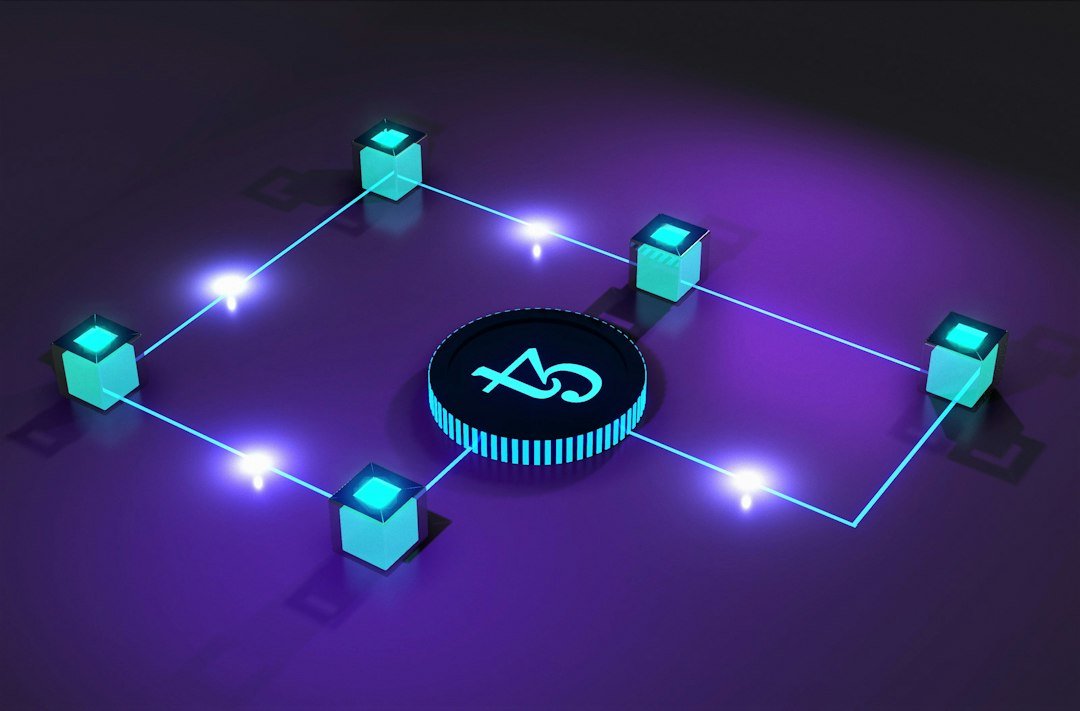
—
Artificial intelligence is no longer a futuristic buzzword—it’s a present‑day catalyst that can transform every facet of an organization. Yet, many companies still struggle to move from curiosity to real‑world impact. That’s where AI integration services step in, turning raw data and cutting‑edge models into seamless, day‑to‑day business tools. In this post, we’ll explore why AI integration matters, how to choose the right approach, and the concrete steps you can take to embed intelligent automation across your operations.
—
1. Why AI Integration Services Are a Game‑Changer
The hidden cost of “AI in a silo”
Most businesses start their AI journey by building a proof‑of‑concept model in isolation—think a churn‑prediction algorithm that lives on a data scientist’s laptop. While the model may achieve impressive accuracy, its value evaporates if it never reaches the front‑line teams that need it. The hidden cost? Lost ROI and wasted talent.
Tangible benefits of proper integration
| Benefit | What It Looks Like | Business Impact |
|———|——————-|—————–|
| Speed to market | Automated deployment pipelines push updates in minutes | Faster product releases, competitive edge |
| Scalability | Cloud‑native microservices handle thousands of requests per second | Supports growth without major re‑engineering |
| Operational consistency | Centralized monitoring, logging, and version control | Reduces errors, improves compliance |
| Data‑driven culture | Real‑time dashboards surface AI insights to every employee | Informed decisions, higher employee engagement |
These outcomes aren’t magic—they’re the result of strategic AI integration services that bridge the gap between data science, IT, and business units.
—
2. Core Components of Successful AI Integration
2.1. API‑First Architecture
Treat every model as a service with a well‑documented REST or gRPC API. An API‑first approach enables:
- Reusability – The same sentiment‑analysis model can power a chatbot, a social‑media monitor, and a customer‑feedback dashboard.
- Security – Centralized authentication (OAuth2, JWT) protects sensitive predictions.
- Version control – New model versions are rolled out without breaking existing applications.
- Prediction latency – Ensure real‑time services stay within SLA thresholds.
- Model accuracy – Compare live predictions to ground truth where possible.
- Fairness metrics – Detect bias against protected groups.
- Data scientists – Build and validate models.
- DevOps / MLOps engineers – Containerize, orchestrate, and monitor services.
- Domain experts – Provide context, label data, and validate outputs.
- Product owners – Prioritize features and align with roadmap.
- Automate CI/CD for models – Every code push triggers a retraining and deployment pipeline.
- Document standards – Naming conventions, versioning policies, and data lineage diagrams become part of the corporate knowledge base.
- Train end‑users – Provide short video tutorials and cheat sheets so employees can request predictions or interpret results confidently.
- 40% reduction in first‑response time
- 22% increase in ticket resolution rate
- 15% drop in support staffing costs
- 30% fewer unplanned downtimes
- $1.2 M annual savings in spare‑part inventory
- Improved safety compliance scores
- 18% lift in average order value
- 25% higher click‑through rates on promotional emails
- Seamless A/B testing via feature flags
Action tip: When commissioning a model, ask the data science team to deliver a Docker container with an OpenAPI spec.
2.2. MLOps Pipelines
Just as DevOps automated software delivery, MLOps automates model training, testing, and deployment. Key stages include:
1. Data ingestion & validation – Automated checks for drift, missing values, and schema changes.
2. Model training – Parameter sweeps run on scalable GPU clusters.
3. Continuous evaluation – Automated A/B tests compare new models against production baselines.
4. Deployment – Blue‑green or canary releases minimize risk.
Action tip: Start with open‑source tools like MLflow, Kubeflow, or Azure ML Pipelines to build a reproducible workflow.
2.3. Monitoring & Governance
AI models can degrade over time due to data drift, bias, or regulatory changes. A robust monitoring stack should track:
Action tip: Integrate alerts into your existing incident‑management system (PagerDuty, Opsgenie) so AI issues are treated like any other production incident.
—
3. Step‑By‑Step Guide to Implement AI Integration Services
Step 1: Define Business Outcomes
Start with a problem statement, not a technology wish list. Example: “Reduce order‑processing time by 30% using automated invoice classification.” Clear metrics (time saved, error reduction) make it easy to evaluate ROI later.
Step 2: Assemble a Cross‑Functional Squad
Action tip: Use a RACI matrix to clarify responsibilities and avoid hand‑off bottlenecks.
Step 3: Choose the Right Tech Stack
| Need | Recommended Options |
|——|———————-|
| Model serving | TensorFlow Serving, TorchServe, Seldon Core |
| Orchestration | Kubernetes, Amazon EKS, Azure AKS |
| Data pipelines | Apache Airflow, Prefect, Dagster |
| Feature store | Feast, Tecton, AWS SageMaker Feature Store |
| Observability | Prometheus + Grafana, OpenTelemetry, Evidently AI |
Select tools that align with existing infrastructure to reduce integration friction.
Step 4: Build a Pilot and Iterate
1. Prototype – Deploy a minimal viable model behind an API gateway.
2. Collect feedback – Use internal users or a small customer segment to test.
3. Refine – Adjust features, retrain, and improve latency based on real usage data.
Action tip: Adopt a “fail fast, learn fast” mindset; a two‑week sprint is enough to surface hidden challenges.
Step 5: Scale and Institutionalize
Once the pilot meets its KPI targets:
—
4. Real‑World Use Cases Demonstrating AI Integration
4.1. Intelligent Customer Support
A mid‑size SaaS company integrated a natural‑language understanding (NLU) model into its ticketing system via an API. The model auto‑tags incoming tickets, routes them to the correct support tier, and suggests response drafts. Results:
4.2. Predictive Maintenance for Manufacturing
A factory deployed an IoT‑driven anomaly detection model that streams sensor data to a cloud‑based inference service. The model predicts equipment failures 12‑24 hours in advance, triggering automated work‑order creation. Outcomes:
4.3. Personalized Marketing Automation
An e‑commerce retailer used a recommendation engine built on collaborative filtering, exposed through a REST endpoint. The engine feeds real‑time product suggestions into email campaigns and on‑site widgets. Impact:
These examples illustrate that AI integration services turn isolated models into revenue‑generating engines.
—
5. Overcoming Common Challenges
| Challenge | Why It Happens | Practical Remedy |
|———–|—————-|——————-|
| Data silos | Departments store data in separate warehouses. | Implement a unified data lake or a federated query layer (e.g., Trino). |
| Model drift | Real‑world data evolves faster than retraining cycles. | Schedule automated retraining and set drift detection alerts. |
| Regulatory compliance | AI decisions affect credit scoring, hiring, etc. | Embed explainability tools (SHAP, LIME) and maintain audit logs. |
| Talent gap | Shortage of MLOps engineers. | Upskill existing DevOps staff with focused AI courses; leverage managed services (AWS SageMaker, Azure AI). |
| Cost overruns | Unlimited GPU usage for training. | Use spot instances, set budget caps, and monitor resource utilization. |
Addressing these pain points early ensures a smoother, more sustainable AI journey.
—
Conclusion: Key Takeaways
1. AI integration services are the bridge between experimental models and tangible business outcomes.
2. An API‑first, MLOps‑driven architecture guarantees scalability, security, and maintainability.
3. Follow a structured, outcome‑focused roadmap—define goals, build cross‑functional squads, select the right stack, pilot, then scale.
4. Real‑world use cases—from customer support to predictive maintenance—show measurable ROI when AI is properly integrated.
5. Anticipate and mitigate challenges such as data silos, model drift, and compliance to keep the AI engine running smoothly.
By treating AI as a service rather than a one‑off project, organizations unlock continuous innovation, faster time‑to‑value, and a competitive edge that’s hard to replicate. Ready to start your AI integration journey? The tools, frameworks, and best practices are all within reach—now it’s time to put them into action.